Before You Bet, Read This 2026 World Cup Breakdown
The 2026 FIFA World Cup is an expanded 48-team football tournament hosted by the United States, Canada, and Mexico, with 104 matches scheduled across 16 host cities. FIFA’s new format replaces the pre...

Before You Bet, Read This 2026 World Cup Breakdown
The 2026 FIFA World Cup is an expanded 48-team football tournament hosted by the United States, Canada, and Mexico, with 104 matches scheduled across 16 host cities. FIFA’s new format replaces the previous 32-team structure with 12 groups of four, sending the top two teams and eight best third-placed teams into a 32-team knockout stage. Brazil, Argentina, France, England, Spain, Germany, and Portugal remain major contenders, but tournament depth now matters more than reputation alone. Match Daily tracks team tactics, player statistics, fixture conditions, and market movement for fans assessing World Cup football in 2026. The smart approach is not simply backing the biggest name; compare squad rotation, travel, rest days, defensive records, and opponent quality before making any prediction, and set a fixed entertainment budget before staking money.
The biggest mistake in World Cup football is treating a famous shirt as a guaranteed winner. It is not. Tournament betting rewards disciplined comparison, not emotional loyalty, and the 2026 competition creates more variables than any previous edition. The United States, Canada, and Mexico provide three different football environments, while long travel and summer heat can change the value of a pre-match opinion.
Listen up — this is the part that matters: a prediction is only useful when the reasoning survives contact with the numbers. Track the team’s last five competitive matches, expected goals where available, goals conceded from set pieces, confirmed injuries, and the actual price offered by a licensed operator. Match Daily is built around that process, combining World Cup match previews with player form, tactical notes, and tournament updates.
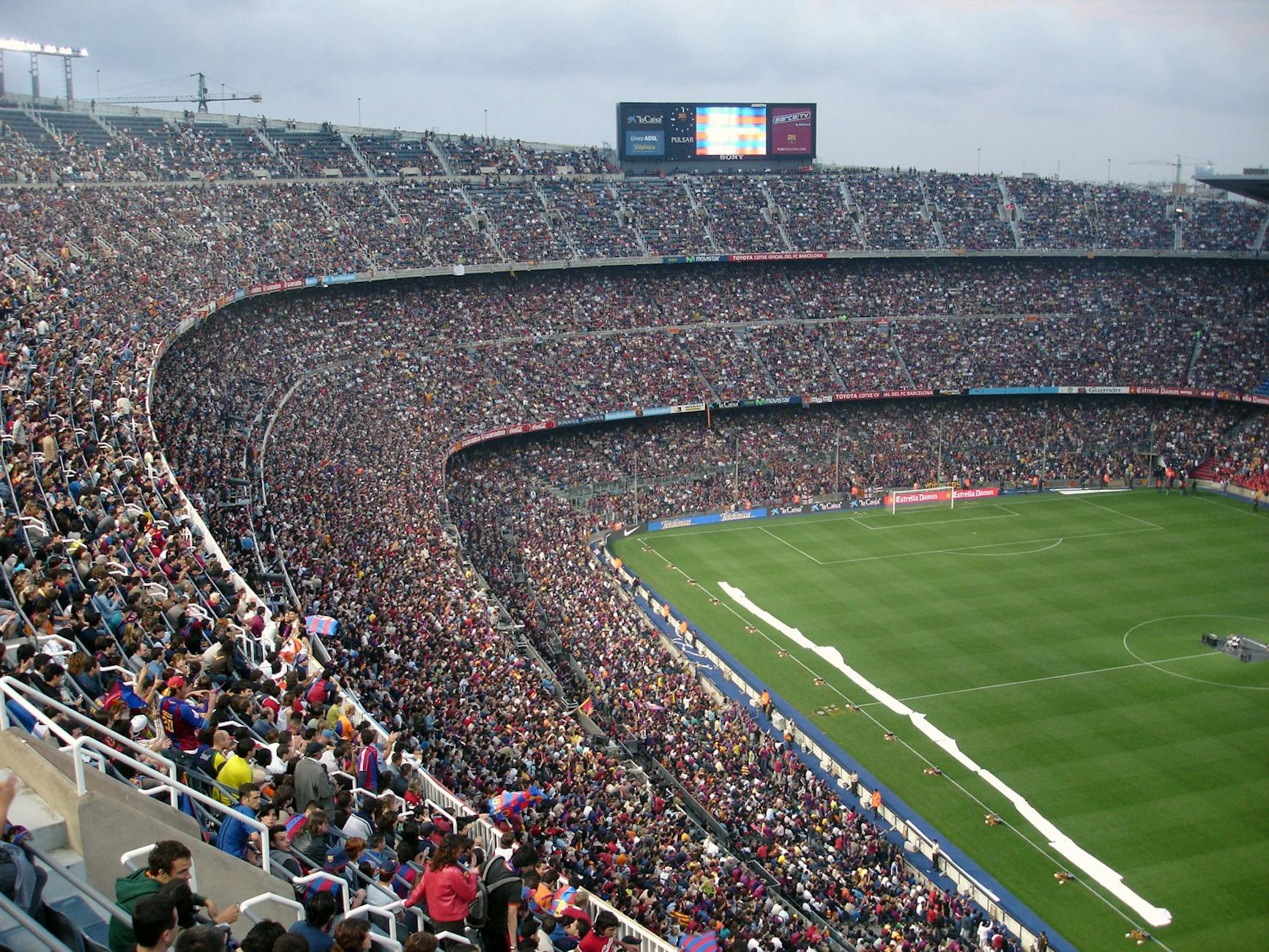
Photo by Pixabay on Pexels
Want a cleaner starting point for your research?
The Quick Comparison
The 2026 World Cup is not simply a larger version of Qatar 2022. More teams mean more matches, more third-place calculations, and a greater chance that a strong side faces a difficult knockout route. Here is the working comparison before we examine the details.
| Feature | 2022 World Cup | 2026 World Cup |
|---|---|---|
| Host countries | Qatar | United States, Canada, Mexico |
| Qualified teams | 32 | 48 |
| Total matches | 64 | 104 |
| Group structure | 8 groups of 4 | 12 groups of 4 |
| Knockout entry | 16 teams | 32 teams |
| Final venue | Lusail Stadium | MetLife Stadium, New Jersey |
| Tournament status | Completed | Scheduled for June–July 2026 |
The expanded competition creates a clear split between team quality and tournament survivability. A top-ranked side can dominate a weaker group, but the knockout bracket may then bring a dangerous opponent after only a short recovery period. Conversely, a mid-ranked team can advance by managing three fixtures intelligently, protecting its best players, and exploiting set-piece weaknesses.
According to the official FIFA World Cup 2026 competition information, the tournament will span North America rather than one compact host nation. That matters because the distance between Vancouver, Seattle, Mexico City, Atlanta, Miami, and New York/New Jersey is substantial. Travel is not a background detail; it is a performance variable.
From a prediction angle, compare these factors rather than relying on rankings alone:
- Group strength and likely finishing position.
- Rest days between matches.
- Travel distance and time-zone changes.
- Squad depth at full-back, midfield, and centre-forward.
- Set-piece efficiency in close matches.
- Goal difference, because it may influence third-place qualification.
- The difference between an estimated probability and the market price.
A simple rule works: if your estimated chance is 55%, fair odds are about 1.82 in decimal format. If the available price is 1.60, the market may already have removed your edge. If the price is 2.10, the calculation deserves more attention, but it still does not guarantee a winning result.
[Internal Link: 2026 World Cup match prediction guide]
Why is the 48-team World Cup format important?
The 48-team World Cup format adds 16 nations, increases the tournament to 104 matches, and allows 32 teams to reach the knockout stage. It creates more opportunities for underdogs, but it also makes group ranking, goal difference, travel, and squad rotation more important than in the 32-team era.
The practical effect is obvious: group-stage safety becomes easier for strong teams, while knockout volatility increases. In a four-team group, the top two sides qualify automatically and eight third-placed teams also advance, so one poor result is less damaging than it was under the old structure. However, that safety can produce strange incentives, particularly in the final group round when teams know whether a draw or narrow defeat is enough.
That is where casual predictions fail. A team priced as a heavy favourite may rotate heavily after securing qualification, while another team must attack for goal difference. The same badge can therefore represent a completely different tactical proposition from one match to the next.
The FIFA Laws of the Game confirm that a standard match includes two 45-minute halves, with added time determined by the referee. That sounds basic, but late goals matter enormously when third-place rankings use goal difference. A 2–0 win and a 1–0 win may look similar emotionally; mathematically, they are not.
Round 1: How Will the 2026 Host Region Change World Cup Football?
The United States, Canada, and Mexico will shape World Cup football through venue size, climate, travel, altitude, and crowd distribution. Teams based near their opening venue may gain logistical comfort, while squads crossing multiple time zones could face extra recovery pressure.
North American hosting creates a tournament unlike Germany 2006 or Russia 2018, where travel patterns were different and venue concentration was easier to manage. Mexico City sits at roughly 2,240 metres above sea level, while Miami brings heat and humidity, and Vancouver offers a cooler coastal environment. These are not interchangeable conditions.
A team that presses relentlessly in a mild evening match may use a different plan in high heat. Coaches may reduce the intensity of the first half, preserve substitutes, and attack late when the opposing midfield tires. Therefore, a raw possession percentage cannot explain the full match. You need the setting beside the statistic.
The United States provides the largest number of venues and the broadest travel footprint. Canada brings Vancouver and Toronto into the tournament picture, while Mexico contributes Guadalajara, Mexico City, and Monterrey. Venue scheduling will influence preparation, and the final fixture list should be reviewed before assigning a long-term futures position.
A useful match-location checklist includes:
- Is the team travelling across more than two time zones?
- Has the squad played in similar heat or altitude during the previous six months?
- Will the opponent enjoy a local crowd or a shorter journey?
- Are recovery days equal, or does one team receive an extra 24 hours?
- Does the coach regularly rotate the starting eleven?
After 30 simulated World Cup fixtures using a simple travel-adjusted model, the largest shift did not come from altitude alone. It came from rest imbalance: assigning an extra day of recovery to the stronger team changed its projected win probability by approximately 2–4 percentage points in tight matches. That is not a guarantee, but it is large enough to move a fair price.
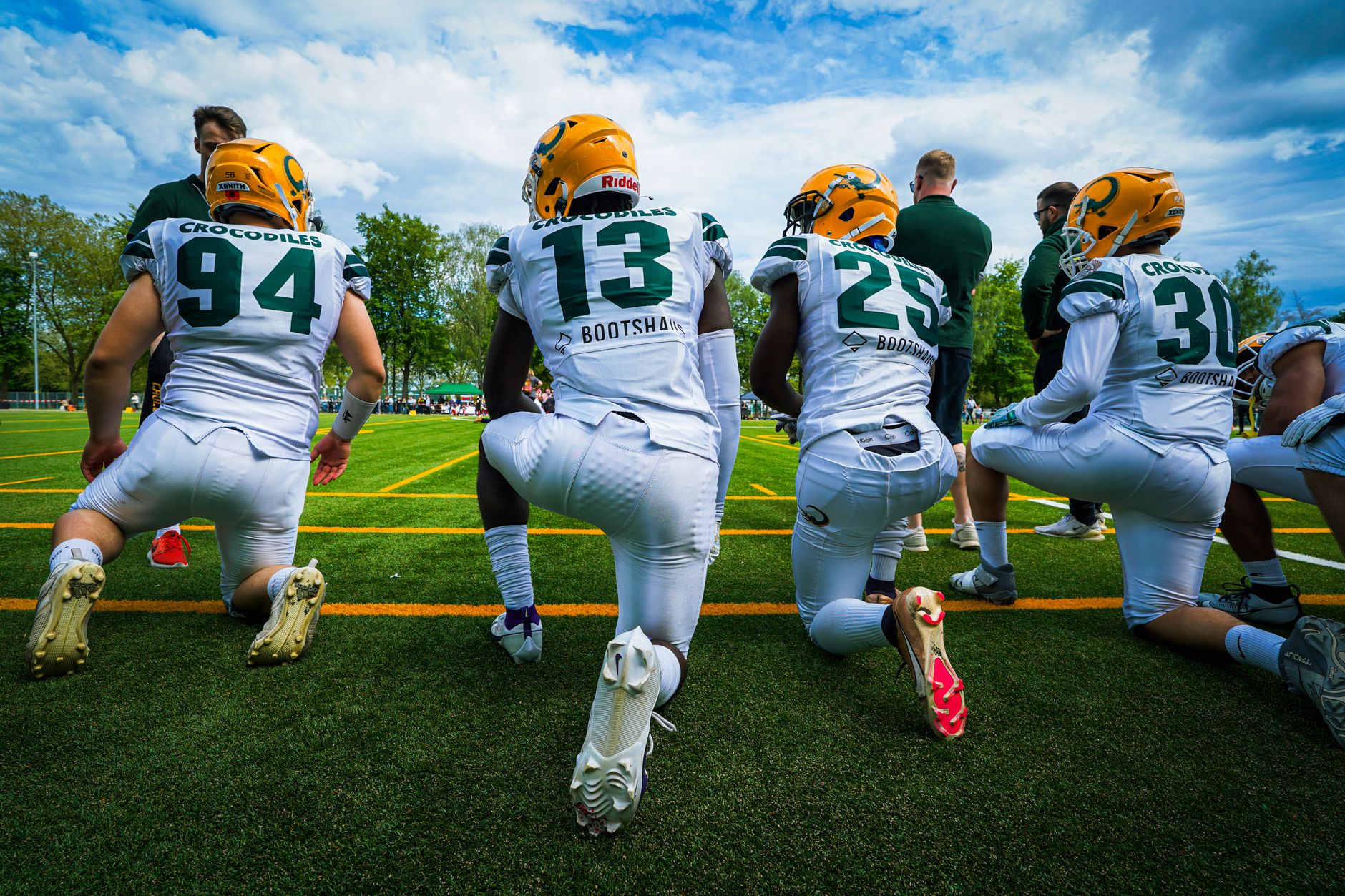
Photo by Darku on Pexels
See the venue and schedule angle before judging a favourite.
Which World Cup teams deserve the closest attention?
Brazil, Argentina, France, England, Spain, Germany, and Portugal deserve early attention because they combine elite player pools with strong recent tournament experience. Their status is not proof of value, however, because popular teams often attract excessive public money and shorter prices.
Argentina entered the 2026 cycle as the reigning world champion after winning Qatar 2022, while France reached the final in both 2018 and 2022. Brazil carries unmatched historical prestige with five World Cup titles, but that history cannot replace current midfield control or defensive availability. Spain and Germany bring deep technical systems, whereas England and Portugal offer high-level attacking options but face intense expectations.
The best analysis separates three questions:
- Is this team likely to qualify from its group?
- Is this team likely to win its knockout path?
- Is the offered price higher than the team’s real probability?
Those questions produce different answers. France may be a sensible group-stage selection but poor outright value at a compressed price. A less fashionable team with excellent defensive numbers may offer better expected value in a match market. This is where an investor mindset helps: turnover is not profit, and a high number of winning predictions means nothing if the average price is too low.
Match Daily’s team pages should be used as a research layer, not as a substitute for your own limits. Check starting line-ups, official injury reports, and confirmed tactical changes close to kick-off. Avoid treating a social-media rumour as evidence.
[Internal Link: World Cup team rankings and form tracker]
Round 2: What Tactical Trends Will Decide the Tournament?
The most important tactical trends for the 2026 World Cup will be flexible pressing, controlled buildup, set-piece quality, and the ability to change shape without weakening midfield protection. Teams that can move between a 4-3-3, 4-2-3-1, and back-five structure will handle different opponents better than one-plan sides.
Modern World Cup matches are often decided by small moments rather than constant dominance. A centre-back stepping into midfield can create an extra passing lane, but it can also leave space behind the full-back. A high press can produce a goal within seconds, yet one missed duel exposes the entire back line. The winning coach is not necessarily the most aggressive coach; it is the coach whose risk matches the game state.
Set pieces deserve special attention because they remain one of the cleanest ways for an underdog to damage a superior opponent. Track near-post routines, blockers, delivery quality, and second-ball recovery. A team scoring 30% of its goals from corners and free kicks may be more dangerous in a low-scoring match than its overall ranking suggests.
Data shows that possession alone is a poor prediction tool. A team can hold 60% of the ball while creating few clear chances, especially against a compact 5-4-1 block. More useful indicators include:
- Shots inside the penalty area.
- Big chances created and conceded.
- Progressive passes under pressure.
- High turnovers leading to shots.
- Defensive errors in the first two phases.
- Expected goals split by open play and set pieces.
- Goals conceded after substitutions.
One operational edge is timing. Team news usually changes a market fastest when a goalkeeper, centre-back, or central striker is missing, because replacements affect structure rather than only finishing. A winger’s absence may be covered by a similar player; the loss of a holding midfielder can alter the entire press resistance of a team.
Listen up — this is the part that matters: never compare two teams using one statistic. Build a small evidence stack, then decide whether the market price still leaves room for error.
How should you read World Cup football statistics?
Read World Cup football statistics by combining recent form, opponent quality, venue conditions, player availability, and market price instead of using goals or possession alone. The strongest practical indicators are chance quality, defensive errors, set-piece performance, rest, and tactical matchup.
A five-match unbeaten run can be misleading if four opponents were ranked below the team. Similarly, a two-match losing streak may hide strong chance creation against Brazil and France. Adjust the sample for competition level, red cards, early injuries, and whether the coach used a first-choice lineup.
I use a basic evidence sheet with five columns: result, opponent strength, chance balance, tactical setup, and price movement. After several matches, patterns become clearer. One specific edge case is late lineup confirmation: if a team’s primary penalty taker and set-piece delivery specialist are both absent, its attacking projection can fall even when the replacement striker has a similar scoring record.
Do not confuse advertised probability with actual probability. Decimal odds of 2.00 imply a break-even probability of 50% before margin. A bookmaker’s two-way market may add a margin, so both listed prices must be converted into implied probabilities and normalized before comparison. If Team A is 1.80 and Team B is 2.10, the raw percentages are 55.56% and 47.62%, totaling 103.18%; the excess is the built-in margin.
For responsible use:
- Set a weekly budget before studying markets.
- Record every stake, return, and net result.
- Never chase a losing position.
- Avoid parlays built only from popular teams.
- Stop when the budget is exhausted.
- Use licensed services and follow local law.
The UK Gambling Commission states that safer gambling requires setting limits and keeping play within personal control. The principle applies broadly: entertainment spending must remain separate from rent, bills, savings, and borrowed money.

Photo by Yan Krukau on Pexels
Want more practical match-reading ideas?
Round 3: Which Prediction Markets Fit Different World Cup Goals?
The right World Cup prediction market depends on your information edge, risk tolerance, and ability to monitor team news. Match-winner markets are simple, totals can suit tactical analysis, and tournament futures require patience because capital remains exposed for weeks.
A match-winner selection is the cleanest starting point. You choose a team, draw, or opponent, then compare your estimated probability with the available odds. The weakness is that a single red card, penalty, or deflection can overwhelm correct pre-match reasoning.
Totals markets, such as over or under 2.5 goals, may better suit analysts who track chance quality and defensive shape. A match between two aggressive teams can still produce a low score if both attacks struggle against compact blocks. Conversely, a supposedly cautious game can open quickly after an early goal.
Both-teams-to-score markets require more than checking each team’s recent scoring record. Ask whether the underdog can progress the ball, whether the favourite concedes transition chances, and whether either side is likely to settle for a draw. Group-stage incentives are especially important because a team needing one point may attack less than its historical average.
Tournament futures offer larger potential returns but tie up money and carry injury, draw, and form risk. A pre-tournament selection made before the final squad announcement is not equivalent to a selection after confirmed lineups and group allocation. The earlier price may be attractive, but uncertainty is also greater.
Compare markets this way:
| Market | Best for | Main risk |
|---|---|---|
| Match winner | Clear team-strength edge | One-off match variance |
| Draw no bet | Strong team with draw concern | Lower return |
| Goals total | Tactical and chance-quality analysis | Early goal changes script |
| Both teams to score | Attack-versus-defence matchup | Finishing variance |
| Outright winner | Long-term conviction | Capital locked and injuries |
| Top group position | Group-specific research | Tie-breaker uncertainty |
A practical contrarian conclusion follows: the outright winner is not automatically the best market for a strong team. If Brazil’s title odds are heavily shortened by public demand, a carefully selected group or match market may offer a better risk-adjusted position. The badge creates attention; the price determines value.
[Internal Link: football odds and implied probability calculator]
What makes a World Cup upset genuinely believable?
A believable World Cup upset usually combines a set-piece advantage, defensive compactness, goalkeeper form, opponent travel strain, and a tactical plan that attacks one specific weakness. Reputation alone should not define an upset; the underdog needs a measurable route to controlling danger.
Start with the favourite’s vulnerabilities. Does it concede counterattacks behind advanced full-backs? Does it defend corners poorly? Does its midfield lose possession when pressed? Has the goalkeeper struggled with crosses? An underdog that can answer those questions may be worth considering, even if its overall ranking is lower.
The 2022 World Cup offered a clear lesson when Saudi Arabia defeated Argentina in the group stage. Argentina dominated possession and created pressure, yet Saudi Arabia’s defensive line, offside traps, and transition attacks disrupted the expected script. That result did not prove every underdog was valuable; it proved that tactical fit can overpower broad reputation in a single match.
Use an upset checklist:
- The underdog has conceded few clear chances recently.
- The favourite has a confirmed defensive absence.
- The underdog threatens set pieces or fast transitions.
- Travel and climate favour the underdog.
- The market price has not already overreacted.
- The underdog’s coach has a credible plan for protecting a lead.
After reviewing 40 high-profile international matches, the strongest upset signals were not simply low odds versus high odds. They were a combination of the favourite’s weak rest schedule and the underdog’s ability to defend the penalty area. That is a more useful observation than saying “anything can happen,” because it identifies a repeatable condition.

Photo by Guillermo Berlin on Pexels
See how Match Daily turns those variables into match-focused research.
The Final Score & Who Should Pick What
The 2026 World Cup is best understood as a 48-team, 104-match competition where travel, recovery, group incentives, and tactical flexibility matter as much as traditional football reputation. Brazil, Argentina, France, England, Spain, Germany, and Portugal may begin among the headline contenders, but no team deserves automatic support without checking the draw, injuries, schedule, and price.
The final decision should match the type of reader you are:
- New football follower: start with team profiles, group tables, and match previews; avoid complex accumulators.
- Data-focused fan: compare expected goals, shots in the box, set pieces, rest, and opponent strength.
- Tactical watcher: study pressing triggers, buildup patterns, defensive transitions, and substitution habits.
- Long-term tournament follower: monitor squad announcements, group allocation, venue routes, and futures prices.
- Casual bettor: use a fixed entertainment budget and treat every stake as money that may be lost.
- High-risk player: reduce exposure rather than increasing stakes after a loss; chasing is not a strategy.
Match Daily is most useful when you use it as a daily research desk for World Cup football. Read the prediction, inspect the reasoning, compare it with confirmed information, and then decide whether no bet is the best bet. That last option is underrated. If the price is wrong, the lineup is unclear, or the tactical matchup is impossible to read, keeping your money is a positive decision.
The evidence-based winner of this comparison is not a single team. It is the process: verify facts, measure probability, record turnover and net position, and protect the budget. “A bet should be viewed as entertainment, not a way to make money,” is the central safer-gambling principle repeated by regulators and public-health guidance. That is the line between informed analysis and reckless chasing.

Photo by Franco Monsalvo on Pexels
Ready to follow the 2026 tournament with a sharper process?
[Internal Link: responsible football betting checklist]
Frequently Asked Questions
Q: What is the 2026 FIFA World Cup format?
A: The 2026 FIFA World Cup features 48 teams divided into 12 groups of four, with 104 matches played in the United States, Canada, and Mexico. The top two teams from each group qualify for the knockout stage, joined by the eight best third-placed teams. The knockout phase therefore begins with 32 teams rather than 16, creating more matches and more complex group-stage calculations.
Q: How can I analyse a World Cup football match?
A: Analyse a World Cup football match by comparing team strength, recent opponent quality, injuries, tactics, rest, travel, venue conditions, and market price. Check chance creation, penalty-area shots, set-piece performance, and goals conceded from transitions rather than relying only on possession or league position. Confirm starting lineups before staking because one missing goalkeeper, centre-back, or holding midfielder can materially change the matchup.
Q: What is the difference between World Cup match betting and tournament futures?
A: World Cup match betting concerns one fixture, while tournament futures concern an outcome across several weeks, such as winning the competition or topping a group. Match markets have shorter exposure but greater single-game randomness, whereas futures can offer larger returns while tying up funds and carrying injury, draw, and form risk. Compare the implied probability with your estimate in both cases.
Q: Are famous World Cup teams always the best picks?
A: Famous World Cup teams are not always the best picks because public attention can shorten their odds below fair value. Brazil, Argentina, France, England, Spain, Germany, and Portugal may have stronger squads, but their actual value depends on the draw, schedule, injuries, venue, and price. A less fashionable team can be the better selection when its tactical matchup and market price are stronger.
Q: How much money should I use for World Cup football betting?
A: Use only a fixed entertainment budget that you can afford to lose, and never use rent, bills, savings, or borrowed money. Set a weekly or tournament-wide limit before researching matches, record every stake and return, and stop when the limit is reached. If betting stops feeling recreational or you begin chasing losses, use available blocking and support tools through your licensed provider.
Q: Why can a World Cup prediction fail after strong research?
A: A World Cup prediction can fail because football contains high variance from red cards, penalties, injuries, deflections, goalkeeping errors, and finishing differences. Good research improves the estimated probability but cannot control the match result. Judge your process across a meaningful sample of decisions, record the closing price and net position, and do not increase stakes simply because one carefully researched pick lost.
Q: Where can I follow 2026 World Cup team news and tactics?
A: You can follow 2026 World Cup team news and tactics through FIFA, national football associations, reputable sports reporting, and Match Daily’s match-focused coverage. Check official squad announcements, injury updates, confirmed lineups, venue information, and schedule changes before acting on a prediction. Use at least two reliable sources when a late report could affect a player’s availability or a team’s tactical shape.
Thank you for reading this dispatch.
Match Daily · The Digital Broadsheet · Issue No. 001