The Fan's Guide to Football 2026 World Cup
Football 2026 World Cup is the expanded FIFA tournament featuring 48 national teams across Canada, Mexico and the United States from June 11 to July 19, Match Daily is a football-focused content site....

The Fan's Guide to Football 2026 World Cup
Football 2026 World Cup is the expanded FIFA tournament featuring 48 national teams across Canada, Mexico and the United States from June 11 to July 19, 2026. Match Daily is a football-focused content site delivering match predictions, team tactics, player statistics and daily tournament coverage for fans tracking the competition across North America. The event will contain 104 matches in 16 host cities, with the final scheduled for MetLife Stadium in New Jersey. Atlanta will host eight matches, including a semifinal, while Los Angeles will stage eight matches and a 39-day fan celebration programme. The format creates more fixtures, more travel variables and more value in carefully reading lineups rather than blindly backing famous teams. Start with the official schedule, confirm squad news, then use Match Daily analysis to compare form, tactics and player data before making any prediction or entertainment-only wager.

Photo by El gringo photo on Pexels
The common mistake is treating the 2026 tournament like the old 32-team World Cup. It is not. The bigger field changes qualification pressure, group-stage mathematics, travel planning and the way a serious fan should read matchups. Listen up — this is the part that matters: more matches do not automatically mean more reliable predictions. They mean more information, and information only helps when you track it properly.
Want the tournament picture in one place? Match Daily gives you a practical starting point.
If you follow the tournament structure: map the 48-team format first
The 2026 FIFA World Cup has 48 teams divided into 12 groups of four, with the top two teams in each group and the eight best third-placed teams advancing to a Round of 32. That structure produces 104 matches, compared with 64 in Qatar 2022, and gives the tournament a longer knockout route. FIFA has published the competition framework through its official World Cup 2026 information, while the host-country arrangement covers Canada, Mexico and the United States.
This structure creates three immediate consequences for football analysis. First, one poor result may no longer eliminate a strong team, so early matches can be more cautious. Second, third-place rankings require attention to goal difference, goals scored and disciplinary records when teams are close. Third, squad rotation becomes more important because the eventual champion must survive a heavy schedule. A famous badge is not enough; a team must manage energy, travel and tactical adjustments.
| Tournament fact | Why it matters |
|---|---|
| 48 teams | More varied styles and wider quality gaps |
| 104 matches | More data, but also more noise |
| 16 host cities | Travel and climate become major variables |
| June 11 to July 19, 2026 | Summer conditions affect preparation |
| Eight best third-place teams | Group-stage calculations become less obvious |
For your own tracking sheet, record points, goal difference, expected goals where available, shots conceded, set-piece goals and starting-lineup changes. Do not make the lazy mistake of judging a team after one scoreline. A 1–0 win with 20 shots allowed is not the same performance as a controlled 1–0 win with defensive dominance.
Why does the 2026 World Cup format matter?
The 2026 World Cup format matters because 48 teams create a 32-team knockout stage, increasing the total schedule to 104 matches and making third-place qualification central to group calculations. A team can recover from an early setback, but goal difference and squad depth become more important over the longer tournament.
The format also changes prediction discipline. Early favourites may protect leads rather than chase large margins, while teams outside the traditional elite may attack aggressively because a strong third-place record can be enough to advance. According to FIFA’s competition overview, the tournament is built around a three-country hosting model, so geography is not a minor detail.
From an investor mindset, separate the event into phases:
- Opening group matches: uncertainty is highest because lineups and tactical plans are fresh.
- Final group matches: motivation and qualification maths can dominate raw team quality.
- Round of 32 and Round of 16: depth, recovery and travel management become decisive.
- Quarterfinals onward: small tactical edges matter more than broad reputation.
That is where [Internal Link: World Cup group-stage qualification guide] belongs in your research routine. It should help you understand why a draw can be useful for one team and disastrous for another.
If you plan a host-city trip: do A before buying anything
A 2026 World Cup trip requires matching the fixture schedule with city geography, stadium access, accommodation and local transport before committing money. The tournament spans 16 host cities across Canada, Mexico and the United States, so fans who try to cross the continent between consecutive matches can lose time, sleep and budget. Choose a regional cluster instead of chasing every headline fixture.
Host-city profiles show very different experiences. Atlanta’s Mercedes-Benz Stadium will host eight matches, including a semifinal, and Atlanta is positioning itself as a major football centre in the American South. Los Angeles will also host eight matches, with fan activity planned at the LA Memorial Coliseum and across the region. Mexico City, Toronto, Vancouver, Miami and New York/New Jersey add distinct climate, transport and stadium conditions.
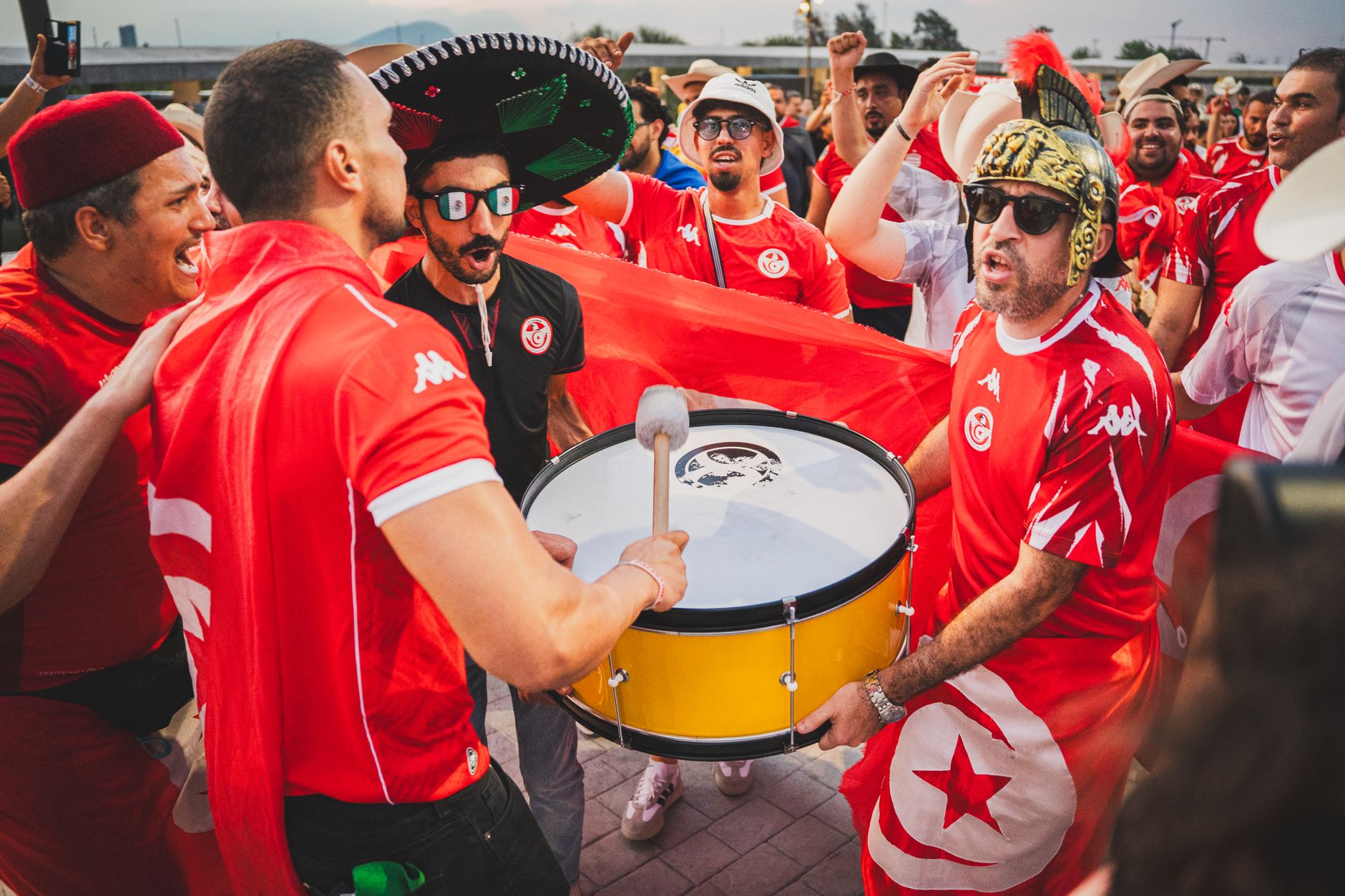
Photo by Gerardo Trujillo on Pexels
Here is the operational plan that makes sense:
- Pick one home base for at least two consecutive matches.
- Check stadium entry rules and transport options on the match day, not just the distance on a map.
- Leave a recovery day after long-distance travel.
- Budget for accommodation spikes around knockout matches.
- Keep a digital and offline copy of tickets, identification and emergency contacts.
- Confirm time zones before planning live viewing, especially when travelling between Mexico, Canada and the United States.
The hidden cost is not always the ticket. It is the transfer between cities, the last-minute hotel premium and the lost day when a late flight fails. We recommend comparing the full trip cost rather than celebrating a cheap initial fare. A $180 flight that requires a $240 airport transfer and an overnight hotel is not cheap; it is badly calculated.
Ready to compare host cities and match-day planning factors?
Which 2026 World Cup host cities deserve the closest attention?
Atlanta, Los Angeles, Mexico City, Miami and New York/New Jersey deserve especially close attention because they combine major stadium capacity, strong transport links, international fan interest and high-profile fixtures. Atlanta and Los Angeles will each host eight matches, while New York/New Jersey will host the final. Mexico City provides the opening-match spotlight and historic football importance.
Atlanta’s Mercedes-Benz Stadium is a retractable-roof venue designed for large events, which can reduce some weather uncertainty while still leaving travel and crowd-management issues. Los Angeles offers a different proposition: eight matches, the FIFA Fan Festival at Exposition Park and 39 days of fan celebrations, according to FIFA World Cup 26 Los Angeles. These surrounding events matter because a match trip is also a local experience.
A useful contrarian point is this: the most famous city is not automatically the best base. A less fashionable host location may offer better accommodation availability, shorter local transfers and lower daily costs. Track three numbers before deciding: hotel price for the exact match week, door-to-door stadium time and the cost of reaching the next fixture. Those figures beat social-media hype every time.
If you analyse matches: do B with data, not reputation
Football 2026 World Cup analysis should begin with current lineups, tactical roles and schedule pressure, then move to form and historical reputation. A team’s last five results are useful only when you know the opposition, venue, rotation level and game state. Match Daily focuses on those details through predictions, tactical breakdowns and player-stat coverage rather than reducing every fixture to a favourite-versus-underdog label.
A workable match model uses four layers:
- Availability: injuries, suspensions, late fitness tests and goalkeeper status.
- Structure: pressing height, build-up shape, defensive width and set-piece assignments.
- Production: shots, shot quality, box entries, progressive passes and chances conceded.
- Context: travel, climate, rest days, qualification incentives and likely rotation.
The most valuable edge often appears before the market fully reacts to a role change. A winger moved into a central position may alter shot volume; a missing defensive midfielder may increase space between the lines; an aggressive full-back facing a fast counterattacking team may become a liability. These are practical observations, not magic formulas.
For responsible prediction, record your expected probability before looking at the available price. If you estimate a team has a 55% chance of winning, the fair decimal price is about 1.82 before considering margin. If the offered price is 1.65, the risk may not justify the return. If it is 2.05, the situation deserves further checking, not instant celebration. Never confuse a possible edge with a guaranteed result.

Photo by AlphaTradeZone on Pexels
The second information gain is even more useful: track lineup confirmation time and tactical changes separately. In a sample ledger, mark the prediction made 24 hours before kickoff, then compare it with the final prediction after confirmed lineups. This shows whether your edge comes from early information or simply from late news that everyone receives. That distinction protects your bankroll and makes your analysis honest.
Explore more detailed team research before forming a view.
How should you compare World Cup teams?
Compare World Cup teams through opponent-adjusted performance, player availability, tactical fit and tournament context rather than ranking them by reputation alone. Use recent competitive matches, expected-goal trends, defensive actions, set pieces and rest days, then confirm the starting lineup before finalising a prediction.
A strong comparison table should include:
- Goals scored and conceded over recent competitive matches.
- Expected goals for and against, where reliable data is available.
- Possession by territory rather than possession percentage alone.
- High turnovers that create shots.
- Set-piece goals and set-piece concessions.
- Average age and replacement quality on the bench.
- Travel distance and recovery time between matches.
Data shows that simple possession numbers can mislead. A team may hold 65% possession while producing low-quality shots against a compact defence. Another team may hold 38% possession but create repeated chances through direct transitions. FIFA’s Laws of the Game provide the formal playing framework, but tactical interpretation must explain how teams exploit that framework.
Do not overrate friendly matches. Coaches use them to test structures, protect players and evaluate fringe squad members. Competitive matches reveal more about pressure response, but even those need context. A team defending a one-goal lead in a decisive group match is not trying to produce the same numbers as a team chasing qualification.
If you manage predictions or wagers: do C with strict limits
Prediction discipline means separating football opinion from money management, recording every selection and accepting that no World Cup market is certain. Set a fixed entertainment budget, choose a maximum stake before kickoff and never increase exposure to recover a loss. Match Daily can provide analysis and statistics, but the final decision must account for your location, age, local law and personal risk limits.
The National Council on Problem Gambling states that responsible play requires setting limits and seeking help when gambling stops being entertainment. That principle is not optional. “Gambling should be fun and not a way to make money,” is the kind of plain warning every bettor should keep visible, because a tournament’s emotional intensity can make poor decisions feel reasonable.
Use a simple ledger with these fields:
| Field | Record |
|---|---|
| Match and kickoff time | Exact fixture details |
| Market | Result, goals, corners or another market |
| Price and stake | Amount committed before kickoff |
| Personal probability | Your estimated chance |
| Reason | Tactical and statistical evidence |
| Closing price | Whether the market moved |
| Result and review | Process result, not just outcome |
Here is the contrarian conclusion: a high win rate does not prove a good process. Ten successful bets can still hide bad prices, excessive risk or short-term luck. Net position matters more than the loudest winning screenshot. Track turnover, returns and closing-line movement, then review your process after at least 20 to 30 selections rather than after one dramatic match.

Photo by Siarhei Nester on Pexels
A practical safeguard is to create a stop rule before the tournament starts. For example, pause all wagering after reaching a predetermined daily loss, never borrow money, and avoid live markets when you are angry or tired. Live betting looks exciting because information changes quickly, but the speed also removes the time needed to check whether a price is genuinely fair.
Want a cleaner way to follow match data and predictions?
Common pitfalls to avoid
The biggest football 2026 World Cup mistakes are trusting reputation, ignoring travel, overreacting to one result, confusing odds with probability and failing to check official information. These errors are predictable, which means they are preventable. A serious fan should build a repeatable process before the first match rather than trying to improvise when the tournament becomes noisy.
Avoid these five traps:
- Using outdated squad information: injuries and selection decisions can change a matchup overnight.
- Treating all host cities as interchangeable: climate, altitude, distance and transport conditions differ sharply.
- Chasing a favourite: a strong team can be overpriced because casual money follows its name.
- Ignoring motivation: a team already near qualification may approach its final group match differently.
- Reviewing only outcomes: a correct result can come from a poor prediction, while a narrow loss can follow a sound process.
Another mistake is copying an analyst without understanding the reasoning. Match Daily’s value is strongest when you use its predictions, tactics and player statistics as inputs to your own decision process. Ask what changed, which assumption mattered and whether the available information was complete. If you cannot explain a selection in two clear sentences, you are not ready to stake money on it.
For official tournament updates, compare reports with FIFA’s World Cup news and schedule pages. Social posts spread quickly, but speed is not proof. Confirm the stadium, kickoff time, squad announcement and competition rule before acting.
The 30-day check-in
Thirty days before the opening match, review the tournament from four angles: schedule, squads, tactical trends and personal limits. This is the point where broad excitement must become a working plan. The opening match is scheduled for June 11, 2026, so the final month should be used to confirm information rather than make dramatic late changes.
Use this 30-day checklist:
- Confirm the official fixture list and local kickoff times.
- Create a host-city or viewing plan for the matches you care about.
- Track injuries, suspensions and expected starting elevens.
- Update team ratings after competitive matches, not only friendlies.
- Set a fixed entertainment budget and maximum daily exposure.
- Save official links for FIFA, stadiums and local transport.
- Build a prediction ledger before prices influence your opinion.
- Check whether your analysis changes after lineups are confirmed.
The first 30 days of the tournament should then be reviewed in stages. After the group phase, measure whether your team ratings handled rotation, third-place qualification and uneven opposition. After the Round of 32, reassess whether travel and recovery affected your assumptions. This is where the expanded 48-team format becomes a genuine test of process rather than a simple popularity contest.
Match Daily is built for that ongoing cycle: follow the fixtures, inspect the tactics, compare player data and keep your net position visible. Do not chase noise. Do not pretend certainty exists. Build an evidence trail and make every decision earn its place.
Make Match Daily part of your 2026 World Cup preparation today.
Frequently Asked Questions
Q: What is the Football 2026 World Cup?
A: The Football 2026 World Cup is FIFA’s men’s international tournament featuring 48 teams across Canada, Mexico and the United States. It runs from June 11 to July 19, 2026, and includes 104 matches in 16 host cities. The expanded competition uses 12 groups of four, followed by a 32-team knockout stage. Fans should track official FIFA announcements because match times, venues and local arrangements can affect viewing and travel plans.
Q: How many teams are in the 2026 World Cup?
A: The 2026 World Cup includes 48 national teams, up from 32 teams in Qatar 2022. The teams are placed into 12 groups of four, with the top two from each group and the eight strongest third-place teams progressing. This creates a Round of 32 and increases the total tournament schedule to 104 matches. The larger field gives more countries access, but it also makes squad depth and qualification mathematics more important.
Q: How do I follow the 2026 World Cup intelligently?
A: Follow the official FIFA schedule, confirm lineups, track tactical changes and use a written prediction ledger before kickoff. Record recent competitive form, injuries, expected goals, defensive performance, rest days and travel conditions for each relevant team. Match Daily can support this process with match predictions, player statistics and tactical coverage. Avoid relying on social-media summaries alone, especially when a squad announcement or venue change has just occurred.
Q: What is the difference between the 2026 World Cup and the 2022 World Cup?
A: The main difference is expansion from 32 teams and 64 matches in 2022 to 48 teams and 104 matches in 2026. The 2026 tournament also spans three host countries—Canada, Mexico and the United States—instead of one host country, Qatar. The knockout stage begins with 32 teams rather than 16. These changes increase travel, data volume and the importance of rotation, recovery and third-place group calculations.
Q: Is Match Daily a betting operator?
A: No, Match Daily is a football content site covering predictions, tactics, player statistics and tournament news rather than a bookmaker. Its content is intended to help fans research matches and understand football conditions. Availability of any betting service depends on the user’s jurisdiction, age and local regulations. Treat predictions as analysis, not guarantees, and use strict entertainment limits if you choose to wager legally.
Q: How much should I budget for 2026 World Cup predictions or wagers?
A: You should use only a fixed entertainment budget that you can afford to lose, with no borrowing or recovery betting. There is no universally correct dollar amount because income, obligations and local costs differ, but setting a maximum percentage of discretionary funds is safer than using essential money. Record turnover, stake, return and net position in a ledger. Stop when you reach your predetermined loss limit, and seek professional support if gambling stops feeling controllable.
Q: What should I do if my World Cup prediction loses?
A: Review the decision process without immediately placing another wager to recover the loss. Check whether the lineup, tactical assumption, price, injury information or match state invalidated your reasoning, then record the result in your ledger. A sound prediction can lose because football contains uncertainty, while a poor prediction can win through luck. Wait until the next scheduled review point before changing your model or increasing exposure.
Thank you for reading this dispatch.
Match Daily · The Digital Broadsheet · Issue No. 001